- Developer
- id Software
- Publisher
- Bethesda Softworks
- Released
- May 15, 2025
- Genre
- FPS
- Platforms
Overview
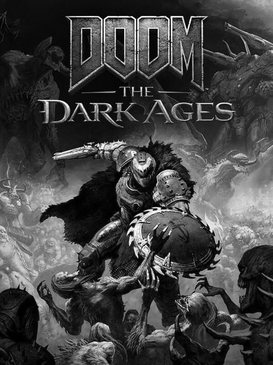
Doom: The Dark Ages is a prequel to Doom (2016) and Doom Eternal, set in a medieval-flavored world where the Doom Slayer is a weapon of the Night Sentinels against demonic invasion. It launched in May 2025 on PS5, Xbox Series X|S and PC.
id Software's prequel to Doom (2016) and Doom Eternal sets the Doom Slayer in a medieval world, where he serves the Night Sentinels and the Maykrs against Hell's armies, led by Prince Ahzrak.
It launched on Game Pass on day one.
Gameplay
The Dark Ages is deliberately slower and heavier than Eternal. The Slayer is a tank, and the big new tool is the Shield Saw, which can block attacks, parry green projectiles, and be thrown at enemies. Parrying is central to combat, and it gives fights a rhythmic, almost fighting-game feel. Melee weapons such as the flail and mace pair with guns that include a skull crusher that fires bone fragments.
Levels are bigger and more open, with secrets to hunt. Sections in which you pilot a giant mech or ride a cybernetic dragon add variety, though they are less satisfying than the core combat. Difficulty sliders let you tune game speed and parry timing.
Where Doom Eternal was about aerial acrobatics, The Dark Ages plants the Slayer's feet on the ground. The Shield Saw is the defining tool: you can block, parry glowing green projectiles, hurl it to shred armor and stun enemies, and charge across the battlefield toward a distant target. Parrying turns enemy attack patterns into rhythm, and the game's melee weapons, including a flail, gauntlet and mace, reward getting close. The guns are as excellent as ever, from the Super Shotgun to a skull-crushing launcher that fires bone fragments.
The levels are larger, with semi-open battlefields full of secrets, and set pieces include piloting a giant Atlan mech and riding a cybernetic dragon. These sections are spectacular, though less refined than the core combat. A suite of difficulty sliders lets you adjust game speed, enemy aggression and parry windows, so almost anyone can tune the experience to their liking.
The Shield Saw is the new star: you can block, parry attacks and throw it at enemies, and green projectiles can be reflected. Combat is slower and heavier than in Eternal, with the Slayer standing his ground. Weapons include the Super Shotgun, the Skull Crusher, which fires bone fragments, and melee weapons like the flail. Mech sections in a giant Atlan and dragon-riding sequences add variety, though they are less polished. Difficulty sliders let you adjust game speed and damage.
Levels are larger and more open than in Doom Eternal, with secrets to find and optional areas, and the Slayer can roam to tackle encounters in different orders. The melee weapons, including the Flail and the Dreadmace, charge with use and finish enemies with devastating blows. The upgrade system, with gold and rubies found in secret areas, rewards exploration. Glory kills return in a simpler form, and the Shield Saw's charge lets you close distance in an instant. Enemy variety is excellent, from imps to Mancubi and giant Titans.
Story
The story is more present than in previous games, with cutscenes about the Slayer's role in a cosmic war. It is serviceable but not memorable.
The story is a prequel set in a medieval world of demons, knights and the Maykrs, and it has more cutscenes than any Doom before it. It is serviceable rather than memorable, but the medieval aesthetic gives the game a distinct identity.
The story is told more directly than in earlier games, with cutscenes explaining the Slayer's role as a weapon of the Maykrs and his alliance with the Night Sentinels. The lore is dense, but the action rarely stops for it, and the cutscenes are spectacular.
Visuals & Audio
The game looks great, with huge battlefields and hundreds of enemies. The soundtrack, by Finishing Move, is heavy and effective, though less distinctive than Mick Gordon's work.
The music by Finishing Move Inc. is heavy and dark. The id Tech 8 engine with ray tracing delivers stunning medieval landscapes.
Performance by Platform
Performance is excellent across PS5 and Xbox Series X, at 60fps, with ray-traced lighting. PC is strong.
id Tech 8 is a marvel. On PS5 and Xbox Series X the game targets 60 frames per second with ray-traced lighting, and Series S remains impressive at a lower resolution. It is one of the best-optimized games on modern consoles.
On PS5 and Xbox Series X, it runs at 60 frames per second with good image quality, and Series S also targets 60 at lower resolution. PC requires ray tracing hardware.
Verdict
Doom: The Dark Ages is a confident reinvention. Some vehicle sections are weaker, but the shield-based combat is brilliant.
It is a bold change of pace for Doom, slower, heavier and more grounded, and the Shield Saw is a brilliant addition. Some vehicle sections fall flat, but the core combat is excellent.
What works
- Superb shield and parry combat
- Heavy, grounded feel
- Big levels with secrets
- Excellent performance
What doesn’t
- Vehicle sections are weaker
- Story is forgettable