- Developer
- Ubisoft Montpellier
- Publisher
- Ubisoft
- Released
- January 18, 2024
- Genre
- Metroidvania
- Platforms
Overview
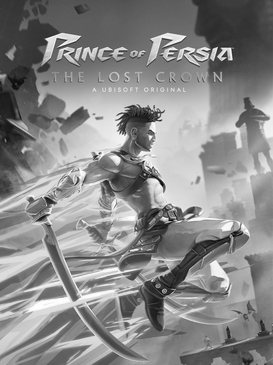
Prince of Persia: The Lost Crown is a 2.5D Metroidvania from Ubisoft Montpellier, the studio behind Rayman Legends, and it is the first new Prince of Persia game in more than a decade. Rather than returning to the Sands of Time trilogy or making a big open-world adventure, the studio reinvents the series as a side-scrolling action-platformer in the tradition of Metroid and Castlevania, and the result is one of the best games in the genre.
You play Sargon, the youngest of the Immortals, an elite group of warriors who serve Queen Thomyris of Persia. When Prince Ghassan is kidnapped and taken to Mount Qaf, a sacred mountain once home to the god Simurgh, the Immortals follow. But Mount Qaf has been cursed, and time there is broken: past and present overlap, and the same moment can be repeated or skipped.
Gameplay
Movement and combat are superb. Sargon is fast, acrobatic and precise, with a slide, a wall jump, air dashes and parries, and the controls are always responsive. Combat combines two swords for close-range combos with a bow and a chakram for ranged attacks, and parries are essential, especially against bosses, whose attacks are often telegraphed with yellow or red flashes. Athra Surges, super attacks built up by landing hits and parries, can heal you, trap enemies or deal massive damage, and you can equip different ones to suit your style.
As you explore, Sargon gains Time Powers that open up the map and add depth to combat. The Wind of Simurgh grants an air dash, while the Shadow of Simurgh lets you leave a shadow at one point and teleport back to it later, which becomes central to the most complex platforming puzzles. Other abilities, such as Clairvoyance and dimensional powers, reveal hidden platforms and open new routes. Each ability is used both in traversal and in combat, and by the end of the game, Sargon is a whirlwind of movement.
The map is huge and full of secrets, divided into distinct areas, from the lower city and the Hyrcanian forest to the depths of the Sunken Harbor and the Sacred Archives, and it rewards backtracking with collectibles, side quests and upgrades. The memory shard system, which lets you take a screenshot and pin it to the map to remember a location you cannot yet reach, is a brilliant idea that other Metroidvanias should copy. Amulets, purchased or found, add perks, and the blacksmith Kaheva upgrades your weapons in exchange for resources.
Boss fights are excellent, demanding and varied, and they are among the highlights of the game, testing your reflexes and your knowledge of parries. The platforming challenges, especially in optional areas, are tough, but checkpoints are generous. Accessibility options are extensive, with adjustable difficulty for combat and platforming, a Guided mode that marks objectives, and assists that can skip platforming sections.
Sargon, one of the Immortals, searches for the kidnapped prince across Mount Qaf, a cursed mountain where time is broken. The game is a Metroidvania with tight platforming and combat, powered by Time Powers like a dash, shadow clone and more. Ubisoft Montpellier's level design is excellent, with challenging platforming sections and clever puzzles. Accessibility options and a memory shard system that lets you take screenshots of the map help.
Story
The story is a solid adventure, with twists involving time manipulation and betrayal. Sargon is a likable hero, eager to prove himself, and the Immortals, including the commander Vahram and the rest of the team, have distinct personalities. The plot builds slowly toward revelations about Ghassan's kidnapping and the curse, and the time-bending structure makes some scenes clever, as characters appear in different eras. Side quests and the characters you meet on the mountain add warmth to the cursed world.
It is not the main draw, and the anime-inspired cutscenes are sometimes stiff, but the story supports the game well and reflects a respect for Persian mythology rarely seen in games.
Visuals & Audio
The visuals are colorful and stylized, mixing 3D models with a 2D perspective and bold lighting. Each area of Mount Qaf has its own identity, from golden palaces to dark forests and frozen peaks, and the backgrounds are often beautiful. Animation is fluid and expressive, especially in combat, where Sargon's combos flow smoothly. Enemy designs draw on Persian mythology, with demons, monsters and spirits.
The music, composed by Gareth Coker and the Iranian-born composer Mentrix, blends orchestral themes with traditional Persian instruments and vocals, and it is one of the game's highlights, shifting from soaring melodies to tense combat tracks. Sound effects are crisp and help you read attacks.
Performance by Platform
The game runs at 60 frames per second on Switch, and at 120 frames per second on PS5 and Xbox Series X when supported by your display. The Switch version is lower resolution, but it is remarkably smooth and an excellent way to play in handheld mode. PS4 and Xbox One versions run well too, with slightly longer loading times. On PC, it is well optimized and runs on modest hardware. All versions are excellent, and the game's responsiveness is equally strong on every platform.
Verdict
The Lost Crown is one of the best Metroidvanias of recent years and a triumphant reinvention of Prince of Persia. Its excellent movement, combat and level design make every hour a pleasure, and its Time Powers and memory shards show real creativity. The story is unremarkable and a few late areas are frustrating, but these are small flaws in a game made with this much skill. Whether you are a Metroidvania veteran or a longtime Prince of Persia fan, it is a must-play.
What works
- Superb, responsive movement and combat
- Clever Time Powers that shape exploration
- Brilliant memory shard system
- Excellent boss fights
- Wonderful music and extensive accessibility options
What doesn’t
- Story is unremarkable
- Some late-game areas can frustrate